
What is bathroom refurbishment and modernisation?
Bathroom refurbishment and modernisation updates a room that is basically sound without stripping it out. The bath, the main tiling and the pipework stay; what changes are the parts you touch and look at every day: taps and shower valve, vanity unit, screen, towel rail, lighting, extractor, grout and sealant. Done well, it makes a bathroom look and work years younger for a fraction of the cost and disruption of a full refit.
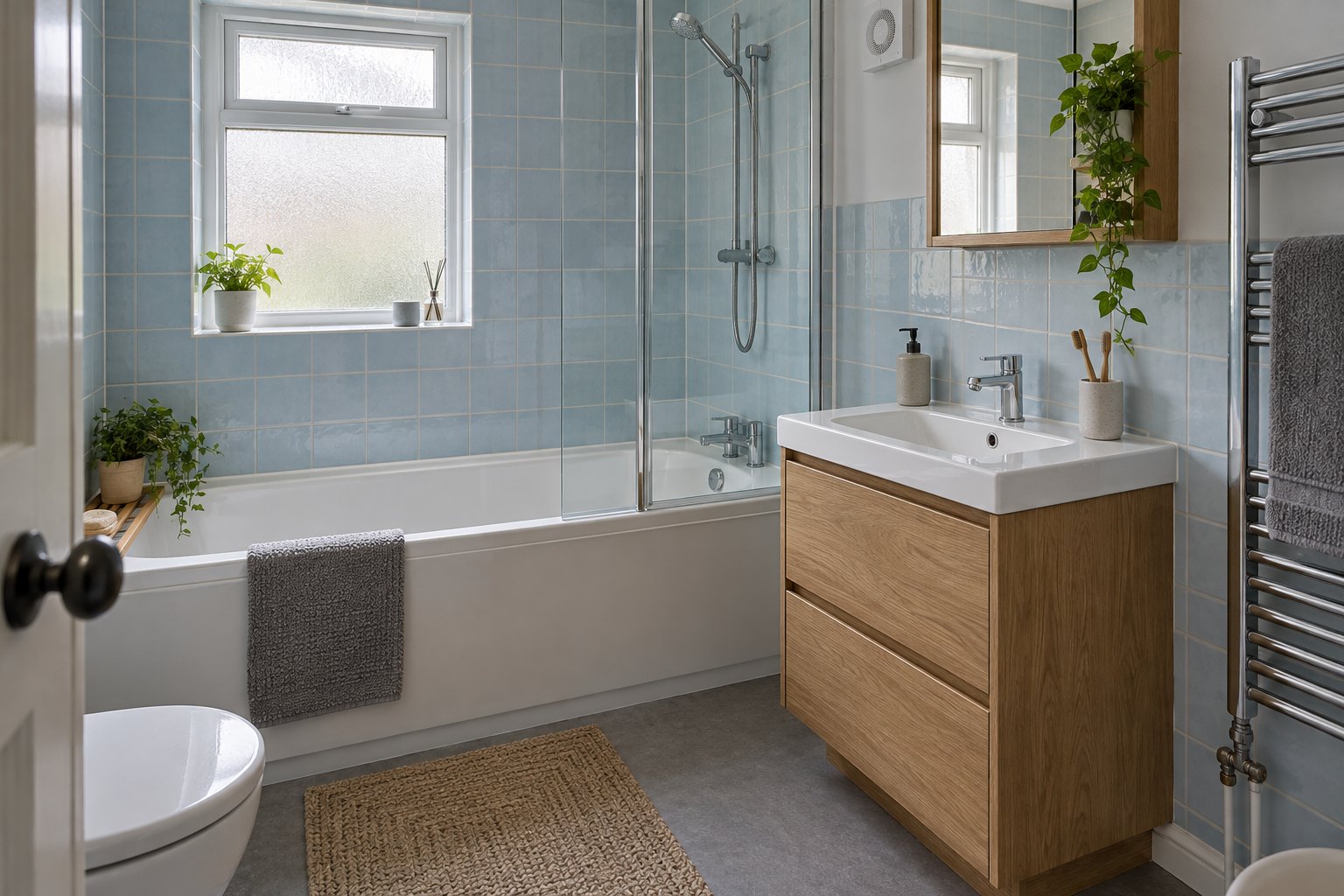
It is a common choice for London landlords between tenancies, for flat owners who want a lift before selling, and for households who know a full renovation is a few years away but need the room to function properly now. The trick is knowing which parts can be kept: a fitter should check that the bath, tray and walls are sound before recommending a refresh over a replacement.
Signs you need bathroom refurbishment and modernisation
- The tiles are firmly fixed but the grout is discoloured and the sealant keeps going mouldy.
- Taps drip, the shower mixer will not hold its temperature or the screen leaks.
- The basin sits on a pedestal with nowhere to store anything.
- The extractor is noisy, weak or missing, and the ceiling shows condensation marks.
- Lighting is a single ceiling fitting that leaves the mirror in shadow.
- An old radiator could be swapped for a heated towel rail on the same pipes.
Refurbishment options explained
Regrouting and resealing
Raking out and replacing grout, then resealing around the bath, tray and basin, can transform tired tiles. The grout must suit the tile and joint; some epoxy products offer improved stain resistance but need careful application. Sealant should only go on to a dry, clean joint, so the bath is usually filled with water while it is applied to allow for movement.
New taps, valves, screens and furniture
Replacing surface-mounted fittings is quick. Changing a concealed valve is harder, because the replacement must fit the existing body or the tiles around it must be cut. Vanity units need to suit the existing waste and supply positions, or the fitter must adapt them.
Ventilation, lighting and heating
A modern humidity-controlled or continuous extractor, IP-rated downlights and an illuminated mirror make a large difference in a windowless London bathroom. A heated towel rail needs suitable heat output as well as compatible pipe centres. Check both before replacing the radiator, and include any new valves or electrical element in the scope.
Partial retiling, panels and flooring
Where one area is damaged, such as the shower wall, that area can be retiled or covered with waterproof panels while the rest stays. Vinyl, LVT or new tiles can go down after the WC and basin pedestal are lifted.
What to include when asking for a quote
List each item you want changed and each you want to keep, and photograph them: the taps and whether they are on the basin or the wall, the shower valve and whether it is surface-mounted or behind the tiles, the radiator and its pipe centres, and the current extractor. Measure the basin width and the space for a vanity unit.
If you want to retile one area, say whether matching or spare tiles exist. Tell the fitter about any history of leaks, stains on the ceiling below or soft flooring, because a refurbishment built on a hidden problem will not last. Mention whether you are a landlord who needs the room back by a certain date.
Ask for a quote that lists each item and task separately, so you can drop or add parts to meet your budget. Ask too how the fitter will deal with a leak under the bath or rotten boards discovered once panels come off.
How much does bathroom refurbishment and modernisation cost?
Our London guide range for bathroom refurbishment and modernisation is £2,500–£6,500, depending on how many items change. It includes labour and mid-range products.
| Typical scope | Guide range |
|---|---|
| Regrout, reseal, new taps and a new shower screen | £2,500–£3,500 |
| New vanity unit, towel rail, extractor and lighting | £3,500–£5,000 |
| Partial retiling and new flooring with updated fittings | £5,000–£6,500 |
Finding a leak or rotten boards can push a refurbishment towards a replacement. Ask whether electrical certification for lighting and extractor work is included.
The bathroom refurbishment and modernisation process: what to expect
- Survey of the room, checking the bath, tray, walls and floor are sound.
- Agreement on the list of items and tasks, and ordering of products.
- Protection of the bath and floor, then removal of the items being replaced.
- Repairs to any small defects found, and first fix for new lighting or extractor cabling.
- Fitting of the new items, regrouting and any partial retiling.
- Resealing, testing of taps and shower, and cleaning.
Most refurbishments take 2–5 working days. The bathroom can often stay partly usable, especially if the WC is not being moved.
Planning permission and building regulations
Refurbishment works do not normally need planning permission or building control approval. Listed buildings are the main exception, where internal changes to historic fabric may need consent; see the planning permission guidance on GOV.UK.
Electrical work is the area to check. New lighting, an extractor or a towel rail with an electric element can be notifiable under Approved Document P when the work is in the zones around the bath or shower. A new extractor should meet the extraction rates in Approved Document F, which is especially important in windowless bathrooms. New taps and valves should comply with the Water Supply (Water Fittings) Regulations 1999.
How to choose a bathroom refurbishment fitter
A refurbishment is a small job, so choose someone who treats it carefully rather than quickly. Ask:
- Can you check the bath, tray and walls are sound before we commit to keeping them?
- Will an electrician do the lighting and extractor, and will I get a certificate?
- Can you itemise the quote so I can adjust the list?
- What grout and sealant will you use in the shower area?
- How long will the bathroom be out of use each day?
Get quotes from London bathroom fitters
Send a single free enquiry about refurbishing your bathroom and up to four fitters who cover your borough may come back with prices. List the items you want changed and include photos.
London Bathroom Fitters passes enquiries to independent bathroom businesses and is not a contractor itself. We do not survey, supply or fit bathrooms, and the fitters who reply are not our staff. Firms are asked for proof of insurance and for references when they sign up, and any agreement for the work is made between you and the fitter you pick.
Frequently asked questions
Is refurbishment worth it, or should I replace the whole bathroom?
If the bath, tiles and pipework are sound, refurbishing costs much less and takes days rather than weeks. If there are leaks, rotten boards or failing tiles, a replacement usually gives better value.
Can I just regrout instead of retiling?
Yes, if the tiles are firmly fixed and undamaged. Raking out and regrouting, followed by fresh sealant, can make old tiles look close to new.
Can an extractor be fitted in a windowless bathroom?
Yes. It needs a duct route to outside, which may run through a ceiling void, and the fan should meet the extraction rates for a bathroom in the building regulations.
Will new taps fit my existing basin?
Usually, if the number of tap holes matches. Mixer taps need one hole and pillar taps two. Some very old basins have unusual hole sizes, so the fitter should check.