
A starting point for your London bathroom project
Finding a bathroom fitter often means explaining the same job several times: where the property is, what needs replacing and when you hope to start. London Bathroom Fitters lets you put those details into one online enquiry. Independent businesses that cover your postcode can then get in touch to discuss the room and prepare their own quotations.
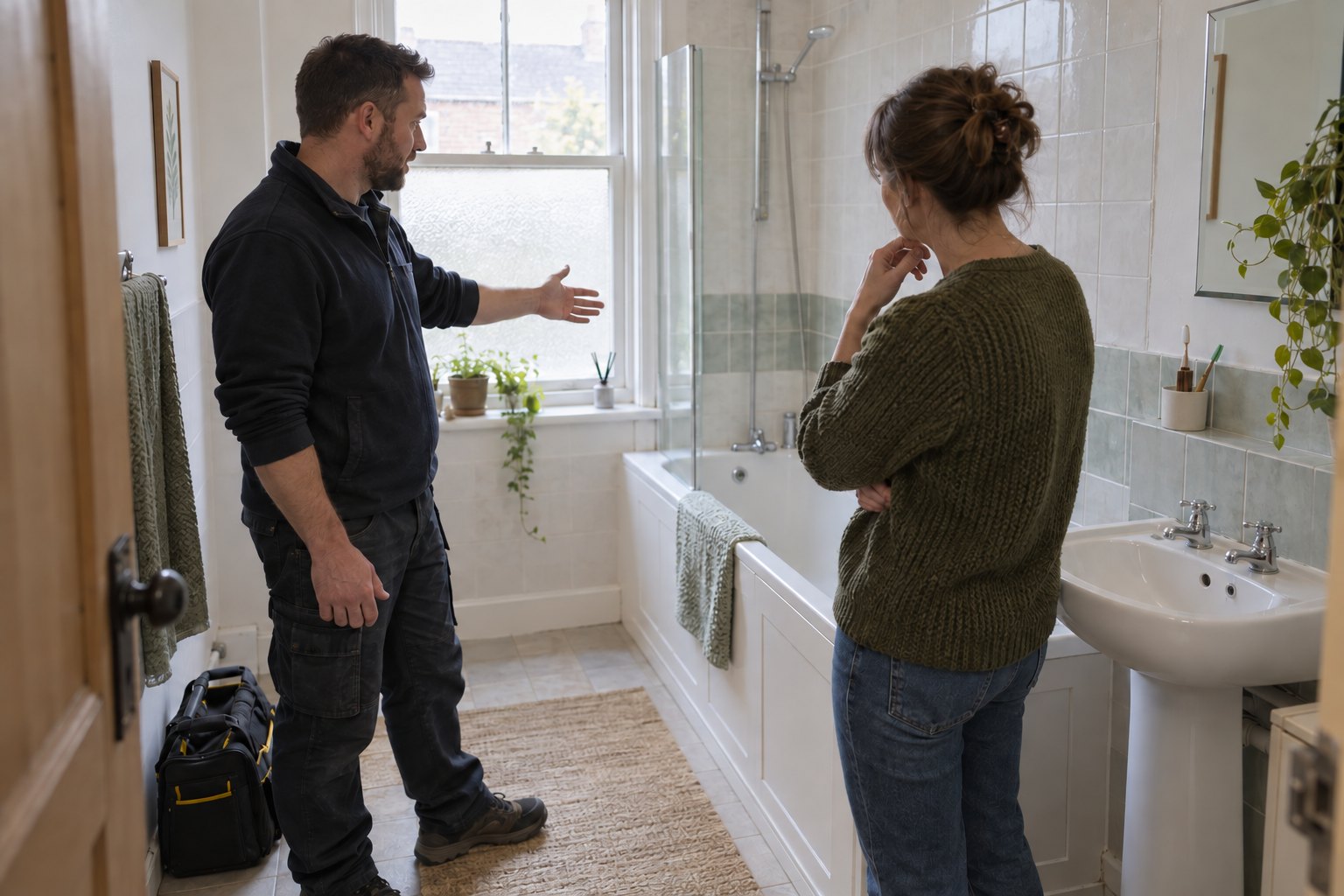
What the matching service does
Homeowners, landlords and leaseholders can request up to four quotations without paying to submit an enquiry. The number available depends on the work, the location and the capacity of suitable firms. There is no obligation to appoint anyone, and a fitter may need to visit before giving a firm price.
We provide the introduction. London Bathroom Fitters does not install bathrooms, supply the suite or employ the contractors who respond. Each business decides whether it can take on your job, how it will be carried out and what to charge. Your agreement for the work is with the company you choose.
At registration, bathroom businesses are asked for references and insurance details relevant to the work they offer. Before booking, ask to see cover for your proposed project and examples of comparable bathrooms. Discuss who will undertake the plumbing, tiling and electrics, rather than assuming the person who visits will do every part.
Built around homes across London
The site covers London's 32 boroughs and the City of London, with pages for neighbourhoods within them. A survey in a Barbican apartment may need to account for shared services and building management rules. In an Ealing terrace, the challenge might be a bath that cannot turn on the stairs. A bathroom in an Orpington semi may have room to take in the separate WC, but the dividing wall still needs checking.
Say whether there is a lift, where deliveries can stop and whether communal corridors need protection. In a flat, read the alterations clause in your lease and ask the freeholder or managing agent about consent, noise restrictions and any acoustic flooring requirements.
Choosing the scope before choosing the fittings
Our six service guides cover different starting points. A complete renovation opens up the room to renew hidden services and prepare new surfaces. A full replacement keeps the fittings in their existing positions where the connections are sound. Remodelling changes walls or the room's footprint; layout redesign moves fittings within the same walls.
A luxury renovation adds specialist materials and fittings that need suitable floor support, water flow and installation tolerances. Refurbishment and modernisation retains a sound room and updates taps, vanity units, screens, extraction, lighting or grout. If you are unsure which fits, explain what you want to retain and what is causing problems.
Questions worth settling at the survey
Ask how wet areas will be waterproofed, how an extractor will discharge outside and how concealed valves can be maintained. A leak below the bath or movement in the floor needs investigating before new finishes hide it. Moving a WC calls for a workable drainage route, rather than simply enough space on the drawing.
Approval depends on the proposed work and the building. The GOV.UK building regulations guide is a starting point for new bathrooms, structural alterations and electrical changes. Ask which approvals and certificates apply, who obtains them and whether fees are included.
Take time over the written quotation
A useful quotation names the products, tiling area, surface preparation, waste arrangements and payment stages. It explains how repairs discovered after strip-out will be agreed. Keep the scope, any changes and the handover paperwork. When you are ready, send your bathroom enquiry with the postcode and a description of the project.