
What is complete bathroom renovation?
A complete bathroom renovation takes the room back to its shell. Tiles, boarding or old plaster, flooring and usually the ceiling come off; the old supply pipes, wastes and cabling are removed; and the room is then rebuilt from the joists and brickwork outwards. The difference from a suite swap is that the hidden layers are renewed as well: fresh pipework, a waterproofed substrate behind the shower, a floor stiff enough to hold tiles without cracking and an extractor that actually vents outside.
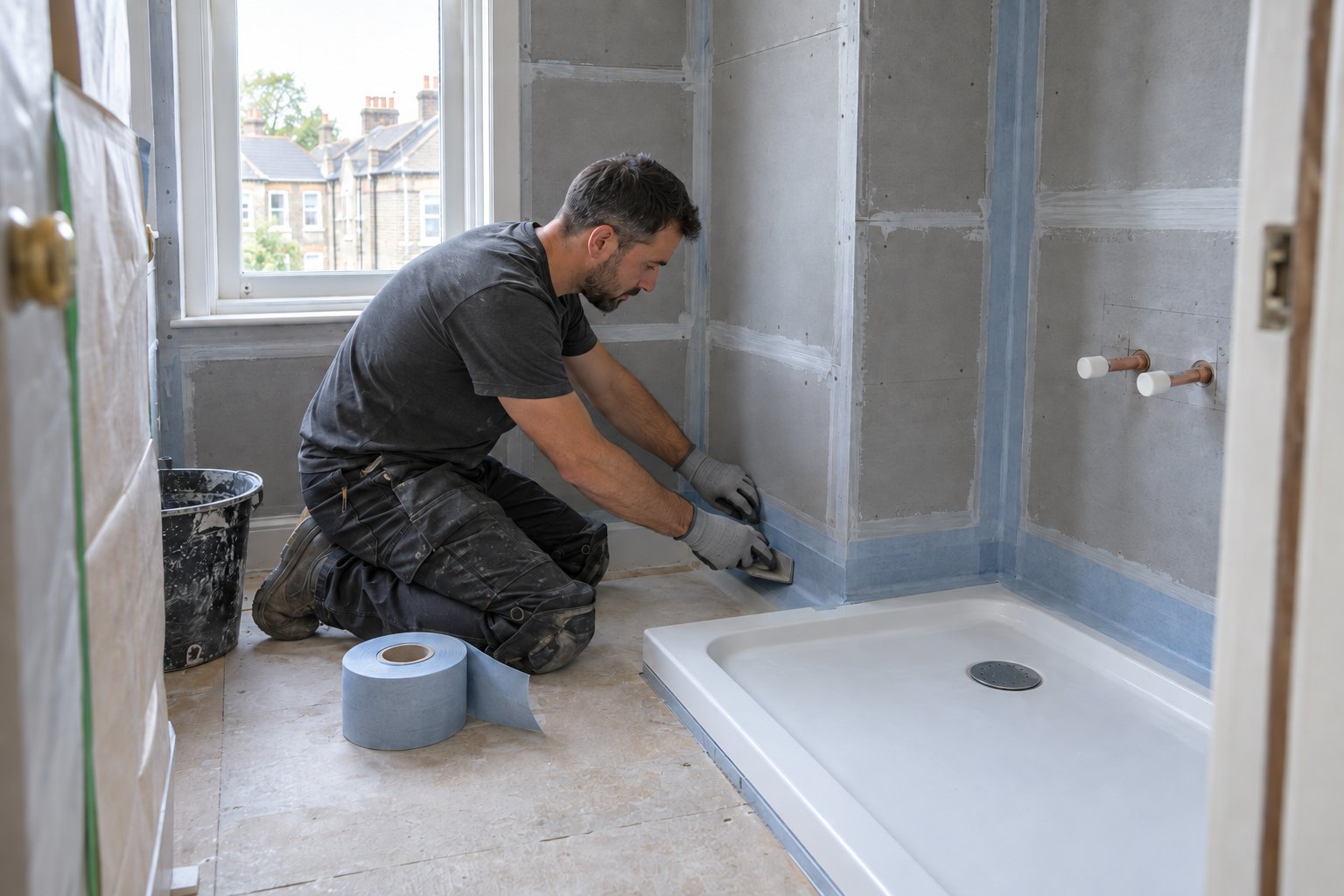
In London it is the usual answer for a bathroom that has been patched too many times. Many Victorian and Edwardian terraces had their bathroom added to the back addition in the 1950s to 1970s, and several owners since have tiled over tiles, boxed in leaks and added a shower over a bath that was never designed for one. Flats in converted houses often hide similar history under the floor. A full renovation clears all of that away and gives you a room with a known specification.
Signs you need complete bathroom renovation
- Tiles have been laid over older tiles, or sound hollow and are lifting in places.
- There is a stain, a crack or a patched area on the ceiling of the room below.
- Floorboards flex or feel soft around the WC pan or the end of the bath.
- You can see old lead or galvanised pipe under the bath or behind the WC.
- There is no extractor, or the fan simply blows into the loft or a void rather than outside.
- The electrics include old light fittings, a wall heater or cabling that nobody has checked for years.
- Every repair so far has fixed one leak only for another to appear somewhere else.
Complete renovation options explained
Supply and fit, or fit only
Most London renovation firms prefer to supply the suite, tiles and valves themselves so that they control delivery dates and carry responsibility for faulty parts. Fit-only pricing suits people who have already bought a suite or want a particular brand, but ask the fitter to check product dimensions and compatibility before anything is delivered, and agree who deals with damaged or missing items.
Tiled walls or wall panels
Tiling over cement-based backer board or a tanked plasterboard is the traditional finish and gives the widest design choice. Laminate or acrylic wall panels go up faster, have fewer joints to clean and cost less in labour, which can shorten the programme by a day or two. A renovation often mixes the two: panels in the shower area, tiles elsewhere, or the reverse.
Keeping or changing the hot water arrangement
A renovation is the natural moment to decide whether the existing system suits the new room. A combi boiler limits how many outlets can run at once; an old gravity cylinder in the airing cupboard may not feed a modern thermostatic shower well without a pump. Changing the system is a separate heating job, but it needs deciding before the first fix pipework goes in.
What to include when asking for a quote
Start with the room itself: the floor dimensions, the ceiling height, the position of the window and door, and what is directly underneath. A bathroom above a kitchen or living room needs more care with leak testing and ceiling protection than one above a hallway. Say roughly how old the house is and whether any work has been done to the bathroom since you moved in, because fitters use that to judge what they may find under the floor.
Explain which items stay, if any: a radiator you like, a recently replaced window or an original door. Give the make of your boiler or cylinder and, if you can, the water pressure or flow you get from the bath tap. Ask each company to break its quote into strip-out and waste removal, first fix plumbing and electrics, floor and wall preparation, waterproofing, tiling by area, second fix and decoration, so you can compare like with like rather than three unexplained totals.
Finally, ask how the quote treats what cannot be seen until the room is stripped. A sensible renovation quote names provisional sums or day rates for replacing damaged joists, renewing a lead supply pipe or rewiring a circuit, instead of either ignoring them or loading every price with a vague contingency.
How much does complete bathroom renovation cost?
Our London guide range for a complete bathroom renovation is £8,000–£16,000 including labour, a mid-range suite and tiling. It is a budgeting estimate rather than a quotation, and London access, room size and the specification you choose can take a project outside it.
| Typical scope | Guide range |
|---|---|
| Compact bathroom or shower room with a mid-range suite | £8,000–£10,500 |
| Typical family bathroom in a terrace, semi or flat | £10,500–£13,000 |
| Larger room, floor-to-ceiling tiling or difficult access | £13,000–£16,000 |
Hidden repairs, such as new joists, replastering a whole ceiling or replacing a lead supply pipe, are usually priced separately once the room is opened up. Ask whether the quote includes VAT, the skip or waste collection, a council skip licence if the skip sits on the road, and the electrician's certificate.
The complete bathroom renovation process: what to expect
- Survey, measured drawing and agreement on the layout, products and finishes.
- Ordering of the suite, tiles and valves, with delivery booked for the start of the job.
- Protection of floors, stairs and any communal areas, then a full strip-out to bare walls and joists.
- Repairs to the floor structure, followed by first fix plumbing, waste runs and electrical cabling.
- New boarding or plaster, waterproofing of the wet areas and any leak test on the pipework.
- Tiling or panelling, then second fix of the bath or tray, basin, WC, taps, lights and extractor.
- Sealing, testing, cleaning, decoration and handover of certificates and product guarantees.
Most complete renovations take around 8–14 working days on site. The bathroom is unusable for most of that time, so ask the fitter whether a WC can be reconnected overnight during the early stages.
Planning permission and building regulations
Planning permission is rarely involved when an existing bathroom is renovated from the inside, though a listed building can need listed building consent for internal alterations; the planning permission guidance on GOV.UK explains where to start. Flats in London are also governed by their lease, and many leases require the freeholder's written consent before bathroom work begins.
Several parts of the Building Regulations can apply. Electrical work in a bathroom, particularly a new circuit or alterations near the bath or shower, may be notifiable under Approved Document P, so ask whether the electrician is registered with a competent person scheme. A new or replacement extractor should meet the extraction rates in Approved Document F, and any change to hot water safety devices falls under Approved Document G.
If the house was built or last altered before 2000, textured ceiling coatings, old floor tiles and some panels may contain asbestos. A careful fitter will stop and arrange testing if they suspect it; HSE asbestos guidance explains why.
How to choose a complete bathroom renovation company
A complete renovation involves several trades, so these questions tell you how the job will actually be run:
- Who does the plumbing, electrics, plastering and tiling, and are they employed or subcontracted?
- Is the electrician registered with a competent person scheme, and who issues the certificate?
- Can you see photos or visit a finished renovation in a similar London property?
- How are payments staged, and are they linked to completed milestones rather than dates?
- How will stairs, carpets and communal hallways be protected, and who arranges the skip or waste removal?
- What written guarantee covers workmanship, and for how long?
Get quotes from London bathroom fitters
Send a single free enquiry about a complete renovation and up to four fitters who cover your borough may come back with prices. Ask each company how it prices hidden repairs and what the room will look like at the end of each week.
London Bathroom Fitters passes enquiries to independent bathroom businesses and is not a contractor itself. We do not survey, supply or fit bathrooms, and the fitters who reply are not our staff. Firms are asked for proof of insurance and for references when they sign up, and any agreement for the work is made between you and the fitter you pick.
Frequently asked questions
Can a complete bathroom renovation be finished in a week?
Occasionally, for a small room with no surprises and a well-organised team. Most London renovations take 8–14 working days because plaster, adhesive and waterproofing need drying time between stages.
Do I need to replace the pipework if it still works?
Not always, but a renovation is the cheapest time to do it because the walls and floor are already open. Old lead or corroded galvanised pipe is usually worth replacing while access is easy.
Should I buy the bathroom suite myself?
You can, but many fitters charge more for fit-only work or limit their guarantee on products they did not supply. If you buy it yourself, check measurements with the fitter first and agree who handles damaged deliveries.
How much contingency should I keep aside?
Keep around 10 to 15 per cent of the quoted price in reserve for problems found after the strip-out, such as damaged joists or a failed waste pipe. Ask the fitter to price likely extras in advance.