
What is full bathroom replacement?
A full bathroom replacement swaps every fitting and finish in the room while keeping the layout you already have. The bath or shower, basin, WC, taps, tiles and flooring are removed and new ones go in the same positions, connected to the existing waste and supply routes wherever those are in good order. The walls and floor are repaired rather than rebuilt, so the job is faster and less invasive than a full renovation.
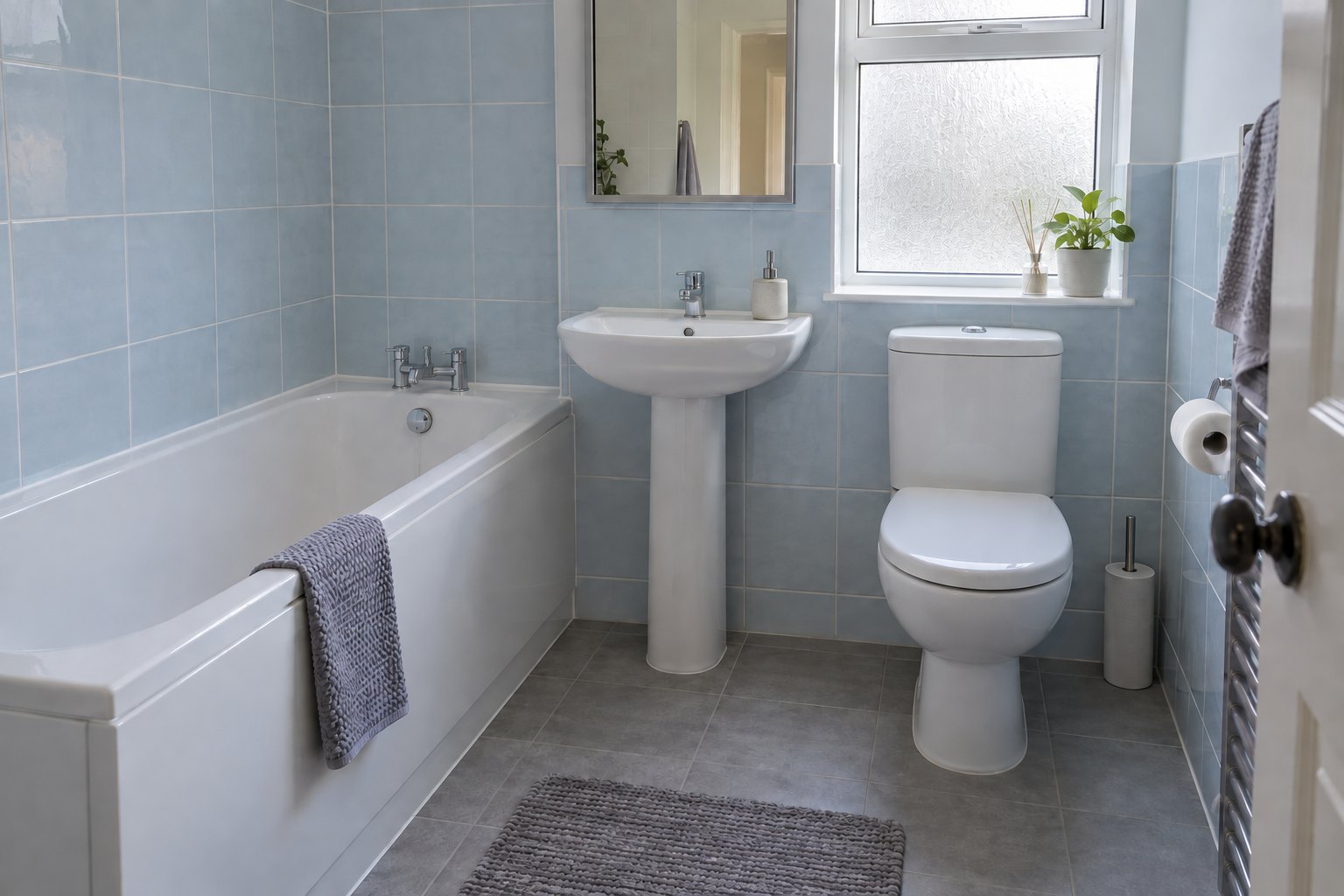
It suits the many London bathrooms whose layout is perfectly sensible but whose suite has had its day: an avocado or champagne suite in a 1970s semi, a builder-grade bathroom in a flat bought from a developer, or a rented property that needs a clean, hard-wearing room before new tenants move in.
Signs you need full bathroom replacement
- The positions of the bath, basin and WC work for you, but the fittings look dated or worn.
- The bath enamel is chipped or stained, or the acrylic has cracked near the waste.
- The basin or WC pan is cracked, or the cistern keeps running despite new parts.
- Tiles are sound but in a colour or pattern you want rid of.
- You are preparing a flat or house to sell or let and want a neutral, new room quickly.
- The shower over the bath leaks past an old screen or curtain rail.
Replacement options explained
Straight like-for-like swap
The new bath, basin and WC go exactly where the old ones were. Because the waste and supply positions do not change, the fitter can usually reuse them, which keeps the floor mostly intact. Check that the new WC's outlet suits the existing soil connection; close-coupled pans vary in how far the outlet sits from the wall.
Bath replaced by a shower in the same footprint
A 1700 by 700mm bath space takes a shower tray of the same size, giving a generous walk-in enclosure without moving anything. The tray waste needs enough depth below it, so the fitter may raise the tray on a riser or cut into the floor to get the fall.
Retiling or wall panels
New tiles give the most choice. Waterproof panels can go over sound, well-bonded tiles in some cases, which saves on strip-out and dust, but only if the fitter is happy the tiles underneath are firmly fixed and the wall is flat.
What to include when asking for a quote
Measure the bath recess from wall to wall rather than measuring the bath itself; London terraces and older flats often have recesses of 1600 or 1650mm, or out-of-square walls, which change what will fit. Note whether the basin is on a pedestal or in a vanity unit, and whether the WC waste goes straight through the back wall to an outside soil pipe, which is common in terraced houses, or down through the floor.
Tell the fitter what you want to keep, such as the radiator, mirror or extractor, and what hot water system feeds the room. If you are converting the bath to a shower, give the make of the boiler or cylinder so the fitter can check the flow. Photos of the pipework under the bath panel and behind the WC are useful, as are photos of the stopcock and any visible isolation valves.
A good replacement quote states which pipes and wastes are being reused, which are being renewed and how much tiling is included in square metres. Look too for a line covering rotten floorboards under the old bath, which is the surprise fitters meet most often on this kind of job.
How much does full bathroom replacement cost?
Our London guide range for a full bathroom replacement is £5,500–£10,500, covering removal of the old suite, a new standard or mid-range suite, tiling and labour. It is an estimate for budgeting, not a quotation.
| Typical scope | Guide range |
|---|---|
| Shower room or small bathroom with a standard suite | £5,500–£7,000 |
| Family bathroom with part-tiled walls | £7,000–£8,800 |
| Fully tiled room with higher-specification fittings | £8,800–£10,500 |
Replacing a rotten section of floor, fitting a new shower valve into a wall that was not tiled before or upgrading the extractor all add to the base price. Confirm whether waste disposal and VAT are included.
The full bathroom replacement process: what to expect
- Survey, confirming the measurements of the bath recess and the existing waste positions.
- Ordering of the suite and tiles, checking that the new items suit the existing connections.
- Isolation of the water, removal of the old suite and stripping of the tiles and flooring.
- Inspection and repair of the floorboards and any pipework that is not fit to reuse.
- Fitting of the bath or shower tray, followed by boarding and tiling of the walls.
- Fitting of the basin, WC, taps and screen, then flooring.
- Sealing, testing for leaks and cleaning, with a walk-through of the finished room.
A typical full replacement takes 5–8 working days on site. The WC is usually the last item fitted, but many fitters will temporarily reconnect it overnight.
Planning permission and building regulations
Replacing sanitaryware in the same positions does not need planning permission, and like-for-like replacement is not normally building control work. Listed buildings are the exception for planning; internal changes to a listed building can need consent, as the planning permission guidance on GOV.UK explains.
Electrical work is where replacement jobs most often touch the regulations. Replacing a light fitting with a similar one is usually straightforward, but a new circuit or alterations close to the bath or shower can be notifiable under Approved Document P. New taps, valves and WCs should comply with the Water Supply (Water Fittings) Regulations 1999, which is why fitters use WRAS-approved or equivalent products.
In a flat, check the lease before starting. Even a straight replacement can be affected by clauses about flooring, noise and working hours.
How to choose a bathroom replacement fitter
A replacement is a shorter job, so look for a fitter who plans it tightly:
- Will the same person or team be on site every day, and who does the tiling?
- What is the day-by-day programme, and when will the WC be out of use?
- Which pipes and wastes will be reused, and how will they be tested?
- Does the price include removing the old suite and all the waste?
- What guarantee covers workmanship, and who handles product faults?
Get quotes from London bathroom fitters
Send a single free enquiry about replacing your bathroom and up to four fitters who cover your borough may come back with prices. Include the recess measurements and photos to get more accurate early prices.
London Bathroom Fitters passes enquiries to independent bathroom businesses and is not a contractor itself. We do not survey, supply or fit bathrooms, and the fitters who reply are not our staff. Firms are asked for proof of insurance and for references when they sign up, and any agreement for the work is made between you and the fitter you pick.
Frequently asked questions
Is a full replacement cheaper than a renovation?
Usually, because the layout, most of the pipework and the floor structure stay as they are. That saves on labour, strip-out and making good, and shortens the time the room is out of use.
Will a new bath fit in the same space?
Standard baths come in 1700, 1600 and 1500mm lengths, with some made to fit smaller recesses. Measure the recess wall to wall, not the old bath, and let the fitter check before ordering.
Can I keep my existing tiles?
Sometimes, if they are firmly fixed and you are happy with them. Removing the old bath often damages the bottom row, so check that matching tiles are available or plan a border or panel instead.
Can the toilet be used during the work?
For most of the job, yes. Many fitters remove and replace the WC last, and will reconnect it overnight on the days when it has to come out.