
What is luxury bathroom renovation?
A luxury bathroom renovation is a renovation built around a demanding specification: marble or sintered stone slab, a concealed thermostatic or digital shower, a cast-iron or stone bath, bespoke vanities, heated floors and considered lighting. What sets it apart is less the price of the products than the engineering needed to make them work: hot water capacity for a large shower head, a floor that can carry several hundred kilos, walls flat enough for slab, and service access to valves hidden behind tiles.
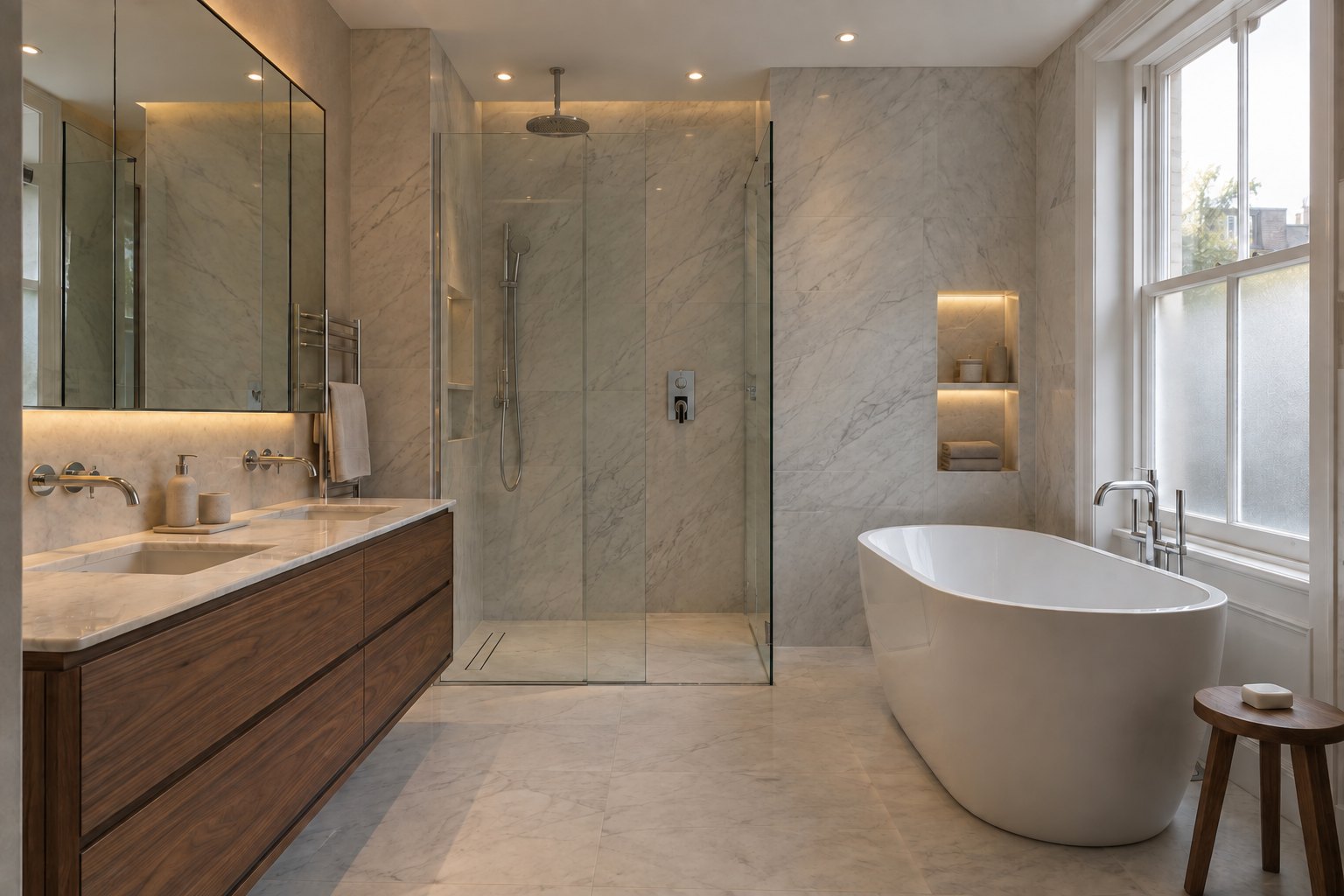
In London the specification often has to fit around the building. Mansion-block flats may have lifts too small for a full slab and strict rules on working hours. Georgian and Victorian houses can have joists that sag under a heavy bath. In a top-floor flat, measured pressure, flow and hot-water capacity may limit the shower specification. Any boosting or storage solution must suit the actual system. A fitter who does this work regularly plans the room around those limits rather than discovering them once the stone has arrived.
Signs you need luxury bathroom renovation
- You want a large rainfall or body-jet shower, but your current shower barely manages one outlet.
- The design calls for large-format slabs or natural stone that must be handled and set precisely.
- You want a cast-iron or stone bath and are unsure whether the floor can take the weight.
- Made-to-measure joinery, a steam enclosure or concealed cisterns are part of the brief.
- You are restoring a period bathroom with reclaimed or specialist fittings.
- You want heated floors and layered lighting designed in rather than added on.
Luxury bathroom options explained
Slab, stone and large-format porcelain
Marble and limestone are beautiful but porous, softer than porcelain and need sealing and careful cleaning. Sintered stone and large porcelain slabs give a similar look with lower maintenance, but their size makes delivery, cutting and fixing a specialist task. Either way, the walls must be flat and the substrate rigid, and lippage between tiles is judged much more harshly on a large polished surface.
Concealed and digital showers
Concealed thermostatic valves keep the wall clean but must be fitted at the right depth and with a way to reach the cartridges later. Digital valves place the mixing unit in a cupboard or void and send water to the head, which suits rooms with nowhere to bury a valve. Both need a hot water supply that matches the flow of the heads you choose.
Heavy baths and statement fittings
A filled cast-iron or stone-resin bath with someone in it can weigh well over 300kg. On a suspended timber floor the fitter may need to add noggins, a spreader board or extra joists. Wall-hung WCs and basins need frames fixed to solid structure, which matters in a room with stud walls.
Heating and lighting
Electric underfloor heating is simple to lay under tiles and suits most rooms; wet systems suit larger rooms connected to the central heating. Lighting in a bathroom has to match the IP ratings required for each zone around the bath and shower, and dimmable circuits and mirror lights need planning before first fix.
What to include when asking for a quote
Give each fitter the full product schedule, with makes and model numbers, rather than a mood board. The fitter needs the dimensions of the bath and tray, the type of valve and its required depth, the slab or tile sizes and finishes, and any joinery drawings. If you have a designer, share their drawings; if not, ask whether the fitter provides a design service and how much it costs.
Describe the hot water system in detail: boiler make and output, cylinder size and type, and the floor the bathroom is on. A fitter can measure the incoming flow rate at the survey, which tells you whether a rainfall head will perform. Explain the route into the property for large items, including the width of stair turns and the internal size of any lift, because this can decide whether slabs arrive whole or cut.
A detailed luxury quote should describe the substrate preparation, the adhesive and waterproofing system, the setting-out drawing for tiles or slab, and who templates and fits the glass. It should also state how expensive products are stored and protected on site, and whether the fitter's insurance covers them before installation.
How much does luxury bathroom renovation cost?
Our London guide range for a luxury bathroom renovation is £16,000–£40,000 including labour and products. The spread is wide because the specification varies so much; stone, joinery and glass can each cost more than the labour for a standard bathroom.
| Typical scope | Guide range |
|---|---|
| High-specification bathroom with porcelain and concealed fittings | £16,000–£24,000 |
| Natural stone finishes with bespoke joinery | £24,000–£32,000 |
| Slab walls, steam or spa features and designed lighting | £32,000–£40,000 |
A new unvented cylinder, a booster pump, floor strengthening or a designer's fees are often priced separately. Long lead times on imported products can also affect the programme and the order of payments.
The luxury bathroom renovation process: what to expect
- Design brief, measured drawings and agreement on the full product schedule.
- Samples, flow testing of the water supply and sign-off on any structural or heating changes.
- Ordering of long-lead items, timed so that nothing holds up the programme.
- Strip-out, floor strengthening and preparation of flat, rigid walls.
- First fix, including concealed valves, underfloor heating, lighting circuits and wall frames.
- Waterproofing, then slab or tile installation to the agreed setting-out.
- Joinery, glass templated from the finished surfaces, and second fix of all fittings.
- Commissioning of the shower, heating and lighting, with care instructions for every finish.
Expect around 14–25 working days on site, depending on the finishes. Glass and joinery are usually measured after tiling, so there can be a short gap before the final fit.
Building regulations, water rules and consents
High-specification bathrooms trigger a few rules that standard refits rarely meet. Under the Water Supply (Water Fittings) Regulations 1999, you generally need to notify your water supplier before installing a bath holding more than 230 litres or a pump drawing more than 12 litres a minute from the supply pipe. A new unvented hot water cylinder must be installed by a suitably qualified person and is covered by Approved Document G.
Underfloor heating circuits, new lighting circuits and electrical work in the zones around the bath and shower can be notifiable under Approved Document P. If a heavy bath requires alterations to the floor structure, the fitter should check whether Approved Document A applies.
Period houses in conservation areas rarely need planning permission for bathroom work, but listed buildings can need consent for internal changes, especially to historic floors, walls or fittings. The planning permission guidance on GOV.UK explains where to start.
How to choose a luxury bathroom fitter
The finish is only as good as the preparation behind it. When shortlisting, ask:
- Can I see finished work using stone, slab or the concealed systems I have chosen?
- Do you fit stone and glass yourselves, or bring in specialists, and who manages them?
- How will you check the floor can take the bath, and the hot water can supply the shower?
- How are expensive products stored, protected and insured before they are fitted?
- What is the programme, and which items have the longest lead times?
- How long is the workmanship guarantee, and what does it cover for natural stone?
Get quotes from London bathroom fitters
Send a single free enquiry about a luxury bathroom and up to four fitters who cover your borough may come back with prices. Attach your product schedule or designer's drawings if you have them.
London Bathroom Fitters passes enquiries to independent bathroom businesses and is not a contractor itself. We do not survey, supply or fit bathrooms, and the fitters who reply are not our staff. Firms are asked for proof of insurance and for references when they sign up, and any agreement for the work is made between you and the fitter you pick.
Frequently asked questions
Will my combi boiler cope with a rainfall shower?
The shower demand must suit the boiler output and measured water supply. Ask the fitter to check both before choosing outlets. A gravity-fed shower pump cannot be added indiscriminately to a combi or mains-fed system; any proposed boosting solution must be compatible.
Can my floor take a stone or cast-iron bath?
A filled bath with someone in it can weigh over 300kg. Many floors can take it with strengthening, but the fitter should check the joist size, span and condition before you order.
How far ahead should I order luxury fittings?
Allow several weeks for most premium fittings and longer for stone, bespoke joinery and imported items. Order early enough that everything is on site before the fitter needs it.
Is underfloor heating enough to heat the bathroom on its own?
It depends on the heat loss and usable heated floor area. Ask for the output to be checked against the room requirements. A towel rail or radiator may still be needed, particularly in a poorly insulated room.