
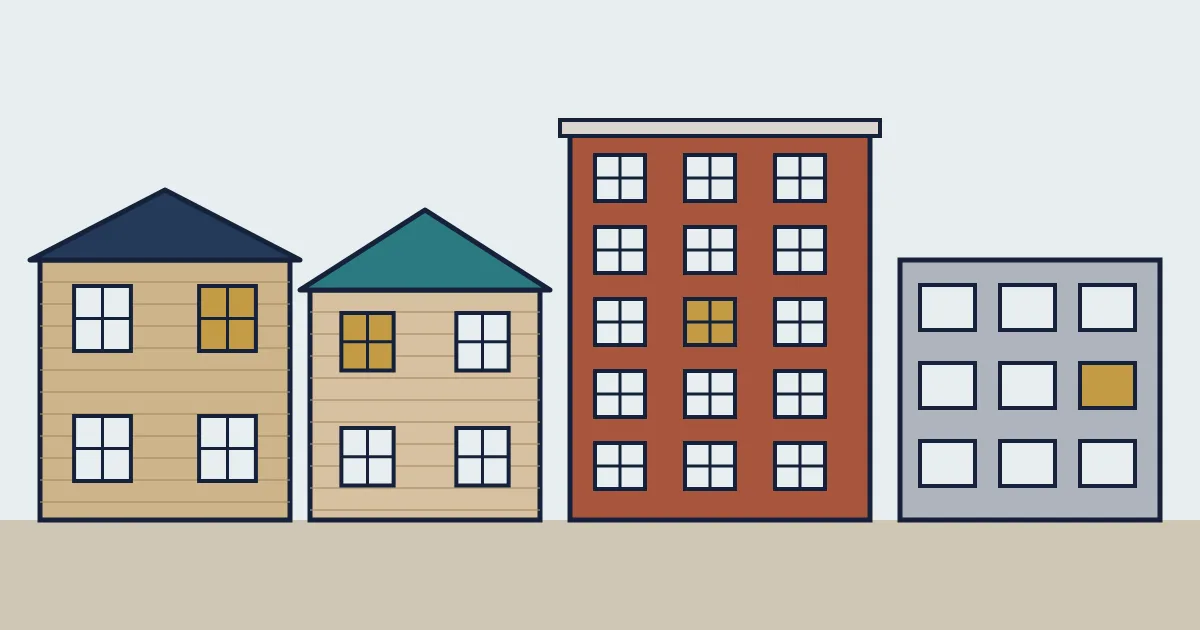
Most advice on bathrooms starts with the suite. In London it makes more sense to start with the building. A back-addition bathroom in a Victorian terrace, a bathroom over the stairs in a 1930s semi and an internal room in a mansion-block flat have little in common, and the job that suits each is different. This guide goes through the five main types of London home and the work that usually fits them.
Victorian and Edwardian terraces
The bathroom is usually in a back addition or converted from a bedroom, with timber floors and a soil pipe on the outside wall. It is often narrow, with the bath across the end. These rooms respond well to a layout redesign because the floor can be adapted, but they also hide more problems than any other type. A complete renovation lets you deal with floors, pipes and waterproofing in one go, and our guide to problems in old London bathrooms lists what to look for.
1930s and interwar semis
Bathrooms of this period tend to be bigger and squarer, often over the hall or kitchen, with a separate WC next door. That makes them the classic candidates for remodelling, where the WC is taken into the bathroom. The structure is generally sound and the floors are better than in a Victorian house, so a full bathroom replacement works well if you are happy with the layout.
Mansion blocks and period conversions
Flats in mansion blocks and converted houses share a soil stack, may be internal rooms with a ducted fan, and come with building rules on hours, noise and materials. The scope for moving fittings is limited by the stack. Cosmetic work and like-for-like replacement are the norm, and luxury specifications are common in the grander blocks. Whatever you choose, read our guide to renovating a bathroom in a leasehold flat first.
Ex-council flats
Many have concrete floors and small, windowless or high-windowed bathrooms. A concrete floor makes waste runs harder to alter, so a refurbishment or a replacement in the same positions is often the practical choice. If you are a leaseholder in a council-owned block, the landlord's consent still applies.
New-build and conversion flats
These are usually sound but mass-produced, with compact bathrooms and pre-routed waste. People change them for taste more than necessity. Refurbishment fits most, with a replacement if the suite is the problem. Check the freeholder's rules and any warranty that might be affected.
Which job usually suits which London home
| Home | Most common job | Why | Watch for |
|---|---|---|---|
| Victorian or Edwardian terrace | Renovation or layout redesign | Timber floors and old pipes, room to adapt | Soft floors, lead pipes, cast-iron stack |
| 1930s semi | Remodelling or replacement | Separate WC next door, sound structure | Load-bearing walls |
| Mansion block or conversion | Replacement or refurbishment | Shared stack limits layout changes | Freeholder rules, hours, neighbours below |
| Ex-council flat | Refurbishment or replacement | Concrete floor limits waste moves | Landlord consent |
| New-build flat | Refurbishment | Sound but dated or basic | Warranty and building rules |
A good fitter will tell you which of the six jobs fits your room, even if it is the cheaper one. Our London bathroom cost calculator will show the ranges side by side.
How to choose the right bathroom job for your London home
- Identify your home type
Note whether you are in a terrace, a semi, a mansion block, an ex-council flat or a new-build.
- Check the stack and floor
Find where the soil pipe runs and whether the floor is timber or concrete.
- Decide what you dislike
Separate problems with the surfaces from problems with the layout or the room size.
- Match the problem to a job
Surfaces only suggests refurbishment, a tired suite suggests replacement, a bad layout suggests redesign or remodelling.
- Check permissions
In a flat, confirm what the lease and managing agent allow before you collect quotes.
Frequently asked questions
Is it better to renovate a bathroom in a flat or a house?
Neither is better, but flats come with extra constraints: a shared stack, building rules and neighbours below. Houses give more freedom but often hide more problems in the floor and pipework.
Which bathroom job is most common in a London terrace?
A full renovation or a layout redesign, because the rooms are often narrow and the floors and pipes need attention. A refurbishment can work if the structure is sound.
Can I take the toilet into the bathroom in a 1930s semi?
Often, yes. It is a common remodelling job. The wall between them may or may not be structural, so have it checked before planning.
Do I need permission to change a bathroom in a leasehold flat?
Frequently, if the work goes beyond cosmetic changes. Your lease will say. If you are unsure, ask the managing agent before you collect quotes.
Ready to talk to a complete bathroom renovation specialist?
Get Free Quotes →